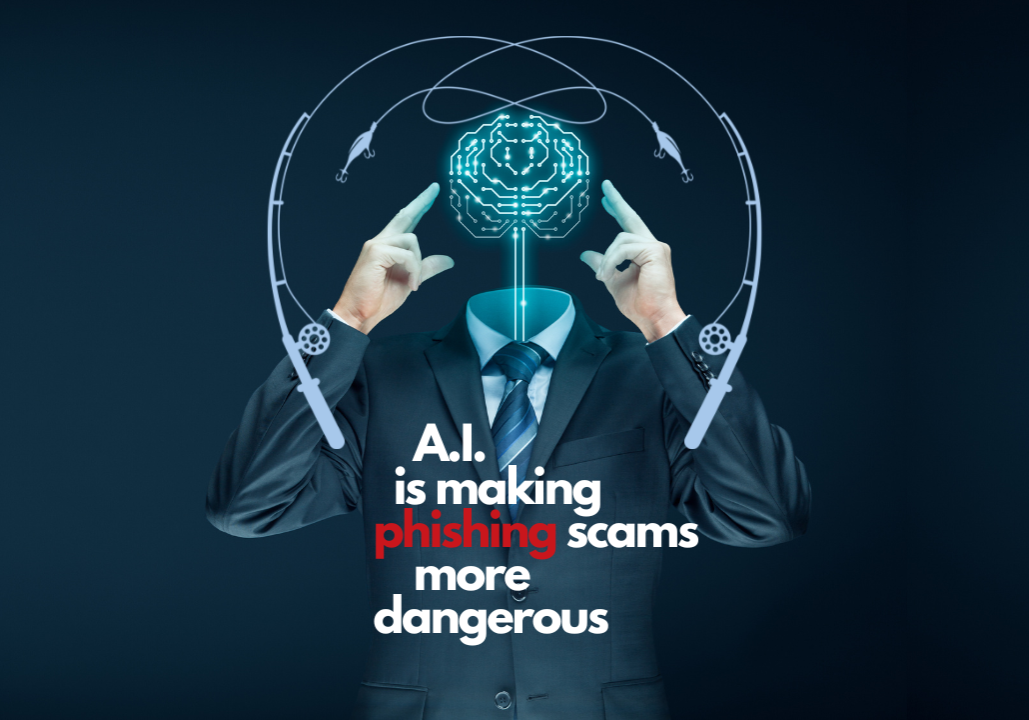
How AI is Making Phishing Attacks Harder to Spot
2026-05-16
Artificial Intelligence makes phishing attacks harder to spot by eliminating traditional human errors and automating hyper-personalized social engineering at scale. Cybercriminals are shifting away from sloppy, mass-blast templates and are leveraging Large Language Models (LLMs) and deepfake tech to create highly convincing, deceptive communications.
AI has fundamentally changed the nature of phishing threats in several key ways:
1. Eliminating Grammatical and Language Red Flags
Flawless Mechanics: Traditional phishing advice relied heavily on looking for typos, poor grammar, and awkward formatting. LLMs generate perfectly structured, native-level text in almost any language instantly. Professional Formatting: AI accurately mirrors business templates, corporate logos, and formal formatting, making fraudulent communications look identical to official company correspondence.
2. Hyper-Personalization (Automated Spear Phishing)
Targeted Data Scraping: AI tools can harvest public data from social media, LinkedIn, and corporate websites to build an intimate profile of a specific target. Contextual Relevance: Instead of generic greetings like "Dear Customer," AI incorporates real-world context—such as current news, ongoing corporate projects, or active vendor relationships—into the bait. Tone Mimicry: Attackers train models on stolen email threads or public text to closely replicate the writing style, internal slang, and signature structure of a target’s actual boss or coworker.
3. Polymorphic Attacks to Bypass Filters
Unique Content Generation: Traditional email security relies on signatures to block known scam templates. AI can rewrite the same core message thousands of times, generating slightly different wording and subject lines for every single victim.
Bypassing Static Rules: Because every email looks structurally unique and natural, the traffic slips past traditional spam gateways that hunt for duplicated, bulk-sent phrases.
4. Deepfakes and Multi-Channel Deception
Voice Cloning (Vishing): Scammers use audio snippets from executive speeches or social media to clone the voices of CEOs or family members. They then call employees to verbally authorize fraudulent wire transfers.
Video Impersonation: Video deepfakes can accurately replicate a known individual during brief virtual meetings or via pre-recorded briefings, tricking targets into trusting subsequent email requests.
5. Automated Scale and Speed
Effortless Scalability: Crafting a convincing, targeted email manually used to take an attacker roughly 30 minutes. AI automates this, churning out hundreds of deeply personalized, uniquely tailored lures in seconds.
A/B Testing: Attackers deploy automated AI loops to rapidly test which messaging angles get the highest click-through rates, optimizing their scams in real time. Because technical mistakes are no longer a reliable metric for spotting a scam, modern defense must rely on looking for behavioral anomalies (such as unexpected urgency or requests that bypass standard procedures) rather than just spelling errors.